When you think of an American entrepreneur, philanthropist, and civic leader, Presidential Ambassador for Global Entrepreneurship (PAGE), chairman of Comerica Bank, Kohl’s, and Cinemark’s executive boards, and founder and CEO of a company worth over $1 billion, who do you think of? Someone who might resemble Warren Buffet, Bill Gates, Donald Trump.
Think again. The name behind these extraordinary feats is 47-year-old Ecuadorian immigrant and mother of four Nina Vaca. A passionate advocate for women in business and leadership, Vaca has made a name for herself through her board service, leadership, and investment in opening doors for women. Vaca embodies the epitome of the American Dream and shared her entrepreneurial journey on the “Diversity Xtra” podcast with Don McKneely.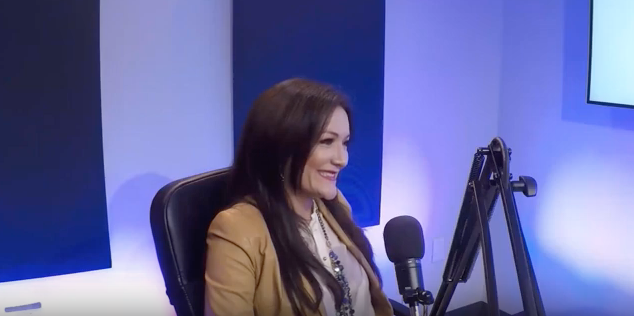
On this episode of Diversity Xtra, Don McKneely takes us on a journey to discover how she became the Founder, CEO, and Chairman of Pinnacle Group, one of the nation’s fastest-growing female-owned business and largest IT staffing firms. McKneely began the episode by enumerating the recent distinctions Vaca has merited and opened the door for Vaca to elaborate on her journey to success:
“My journey actually started before I was born. I’m the daughter of two immigrants that came to this country in pursuit of the American dream, and they found it through entrepreneurship and civic leadership. I left my family after I graduated from college and moved to New York City to pursue a career in Information Technology because I knew it would be that rocket ship.
And believe it or not, I missed my family, so I moved back to Texas. That experience was what kind of propelled me, like many women, to start Pinnacle Group. I started my business in an effort to just pave the way for a brighter future for my family.
Who would have dreamed that 23-year late years later, my family would encompass hundreds and even thousands of people today? That was the reason why I decided to start the business and it has been an incredible journey along the way in many ways.
I was young and single. I was 25 years old. I started with $300 and out of my living room floor. Our first couple of years on that journey were quite frankly amazing. It was the height of the .com era. [It] was 1996 technology and companies were thirsty for technology; things were going great.
But you know as we’ve all learned, some days you wake up and your life changes. So in 2001, I woke up and 9/11 changed our company. We were devastated. I had recruited a lot of family to come and join the business, and I had already given birth to two daughters. In 2001, we found ourselves with the liquidation plan in place, and it was one of the most challenging moments we’ve ever had. It was the time in our company where it was an all hands on deck because the same values that exist today with Pinnacle were the values that we had back then: the value of hard work, perseverance, and failure is just not an option.
We took what was a liquidation plan and turned it into opportunity, and ever since then, we have built the company now to be the powerhouse that it is today.”
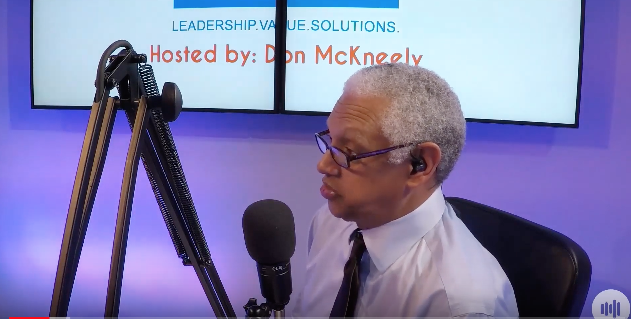
McKneely then asked about the mentors in her life that have fostered her personal and business development, to which Vaca responded:
“In 23 years, I’ve had countless mentors and not only have I had mentors, but I have had sponsors not just in my business life but in my career as an individual. I’ve been blessed to have countless mentors, [who] come in all shapes and sizes and all ages and ranges and experiences.
They could be family, my mother is a big Mentor, but I’ve had countless other business mentors that have opened doors of opportunity for me, too many to name. In fact, I personally think mentors are not always people that are speaking to you; sometimes, they’re people that you’re watching, people that inspire you. In that realm of people, I would count you, Don. I have watched you for the last two decades of my life dedicate your life to the advancement of other people, dedicate your life to telling these empowerful stories, and that has been inspirational to me.”

McKneely then expanded their conversation to all minority and woman-owned business with his question: “What are some of the challenges that you see that Minority and women-owned businesses face today?”
Vaca asked jokingly, “how much time do we have?” then proceeded to talk about the challenges of starting, growing, and scaling a minority-owned business:
“There are a tremendous amount of challenges today of being a minority-owned business, but there’s also a tremendous amount of opportunity. So I always look at the glass half full, never half empty. For example, minority-owned businesses today are starting at a faster rate than any small business in America. They are indeed fueling the economy. Their biggest challenge is scale [and] access to capital.”
Because Vaca has had a lot of success in her journey with international relation as part of her career as well, McKneely asked what she had learned from these international leadership opportunities. Vaca responded:
“I’ve been one of the most fulfilling things I’ve ever done and it’s been ongoing. In 2016, I became a Henry Crown fellow with the Aspen Institute, and it allowed me to again reach across to my home country of Ecuador and build 40 homes as my project for the victims of the earthquake that happened in 2016. 
Being elected in admitted into the CFR has been an honor for me. The Council on Foreign Relations is an incredibly respected organization and one I’m super proud to be part of, but all of [my] international experiences collectively have taught me that giving back is such an amazing thing to do.
Doing good while doing well can be so rewarding, so I really don’t just believe in the American Dream and attaining it through entrepreneurship. I’ve seen firsthand that when you help an entrepreneur, often times you help a family, and when you empower a family, you help a community, and when you help a community, then you really help a nation. I’m just proud and privileged to be able to be part of that ecosystem.”
McKneely then asked what she would recommend an aspiring entrepreneur do when trying to start their business. Vaca responded:
“If I was just starting my business, first of all, I would assume that I had identified something in the marketplace that provides value, something that the marketplace needs. A good entrepreneur identifies a need in the marketplace and then fills it.
The top three things I would do is number one: I would absolutely, unequivocally surround myself with an incredible ecosystem that wants me to succeed. For Pinnacle, it was the Women’s Business Council, the DFW minority supplier Development Council. That is an organization that gives you access to people who have climbed the mountain before. I have lost count of the many women-owned businesses or minority-owned businesses that I’ve looked up to throughout the years and said, ‘if they can do it, so can I.’ And that’s really powerful because as an entrepreneur, time is your most valuable commodity.
Inwardly facing, I believe that your own perspective of yourself is directly related to who you will become. When I became certified by the Women’s Business Council Southwest and WeBank, I realized that I am not alone. I wasn’t just a young girl in technology trying to start a business; I was part of something so much larger than myself. I was part of a tsunami of a movement that’s happening in our country.
The third thing, again internally facing, is who you surround yourself with in your business. As leaders and as CEOs were led to believe that we have to have all the answers and we have to be the smartest person in the room; nothing could be further than the truth. Having the self-confidence to say, ‘I’m going to surround myself with people that are smarter than I am. I’m going to be a good listener and a good leader and I’m going to allow other people the opportunity to spread their wing and bring their talents. I’m going to paint a picture larger than myself.’ That’s when you’re cooking with gas.”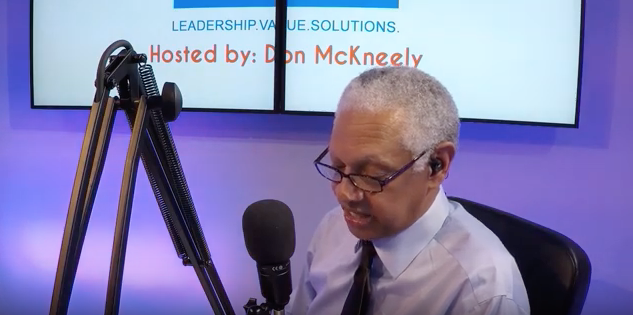
McKneely closed his conversation with Vaca by asking what’s in store for the future of Pinnacle. Vaca believed context was necessary for Pinnacle’s future plans, which she explained in detail:
“I’m going to give you a long answer because it’s not enough to talk about where you’re going. You have to talk about where you’ve been. I always like to say it took us 23 years to become an overnight sensation, and our journey has been peppered with defining moments. But not all defining moments are positive.
Things were going fantastic until 2001. 2001 was a defining moment for us. It was a moment of all hands on deck. It was a moment of almost not making payroll. It was a moment of holding our breath and thinking, ‘how in the world are we going to make it to tomorrow?’ Not next week. Tomorrow. The values that we hold so dearly today, the value of perseverance, hard work, and this just absolute notion of ‘failure is not an option,’ binding together and everybody doing their part, led us out of that moment into a beautiful defining moment.
That was when Verizon gave us our first million-dollar opportunity to provide them fixed price deliverable-based IT solutions way back in 2002. They were our first customer in RSOW space, and that was a defining moment for us because if we could do business with one Fortune 500 company, then we could recruit more.
And that beautiful moment may have given us that leg up in that Renaissance that Pinnacle needed, and we will hold them in our hearts. [It] was followed by a challenging moment [when] a CIO came in in 2005 and outsourced everything to India. So a beautiful moment is followed by a challenging moment. I feel like at Pinnacle, beautiful moments have happened or every six years, so from 2001 came 2007. We won our first EDS contract. We were a 40 million dollar company at the time. We got a 160 million dollar contract. It was our proverbial whale. It was our first shot at serving an integrator. It took us from five different states in the United States to 45 states in the United States.
To say it was a whale, it was a humongous opportunity for us in 2007. We just joined the MSP space, and so for us, that was a beautiful defining moment, we’re eating the whale, we’re working so hard, we’re all cheering. It was like winning a Super Bowl for us going into 45 states in the United States.
Then three years later, we opened our eyes and woke up one day and EDS old Hewlett-Packard, and they took away the MSP program. So I feel like a defining moment is always followed by that challenge, that that humbling experience of ‘what are you going to do now.’ It’s not what happens to you, but it’s how you react
So six years later again exactly to the day is 2013. We were awarded the co-management of the MSP program for all of Comcast and all its information technology. What a gorgeous, beautiful defining moment. If you’ll recall, we were on the cover of your magazine. It was one of the heights of our career. Just solidifying our role in the marketplace, but it was followed by you know in 2014, we bought a software company. We’re trying to do a lot of things, and it turns out that software in the VMS space was not our neck of the woods. It wasn’t our strategic role.
Six years later from 2013 to 2019, I would argue that we are in another defining moment. We’ve had a customer asked us to expand globally, and we have expanded now in Ireland with an Ireland entity, in the UK this year, and in Latin America.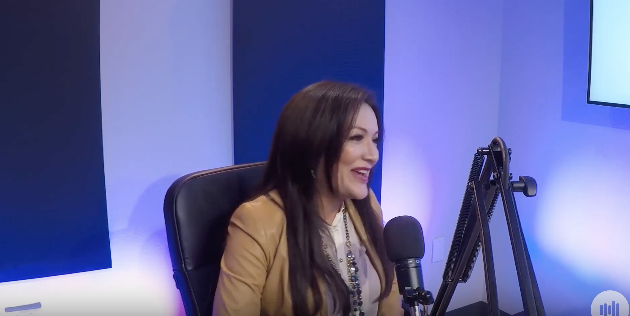
In fact, I was just in Chile last week kicking off our Pinnacle team, so we are sitting in another defining moment in the company. But I wanted to talk about the challenging moments because if you’re an entrepreneur and you’re looking and listening to our story, I don’t want you to think that it’s all about goodness.
There are some losses in there, but our philosophy in life again is that without struggle, there is no progress. It’s not what happens to you, but it’s how you react the defines you as a person and as a company. For the entrepreneurs out there that you may feel like you’re falling on your face, like there is no opportunity, I’m here to tell you that it’s not what happens to you, but it’s how you react
Surround yourself with the right people, the right mentors, the right sponsors, the right ecosystems. For us, going global is just a natural defensive move. Not only are we honored to have a customer take us there, underscoring the power that corporations can have to make a change in minority-owned businesses, but as you look at the marketplace, all of our customers are global. If we’re not going there first, we might be left behind and that’s just not going to happen.”