
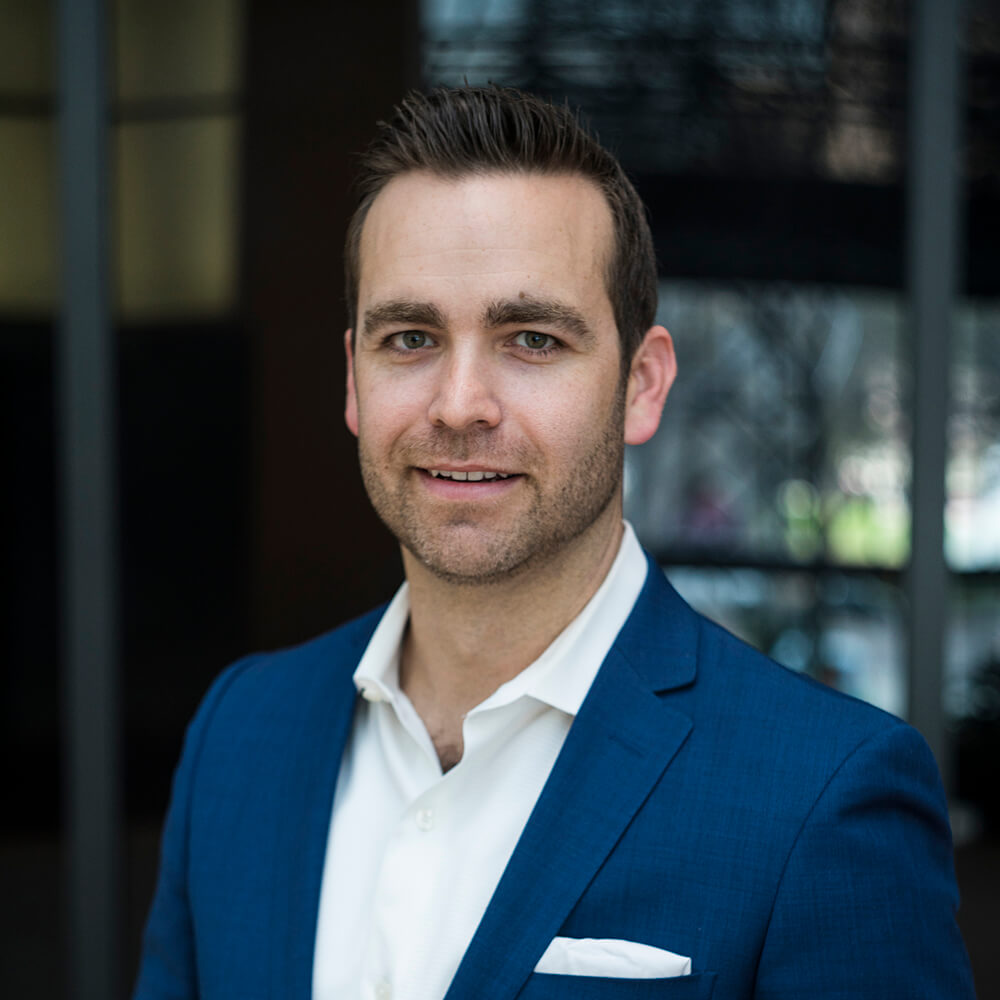
"For once, all Americans can come together united under one flag."
These words come not from George Washington during the American Revolution, not from Abraham Lincoln reuniting the nation after the Civil War, but from Seth Denson’s discussion of the jarring marijuana debate.
It’s probably safe to say that politics are a little divisive in our United States. The 24-hour news cycle has drastically altered the way we receive and interpret information, and suddenly we’re in a world where Twitter is leading the news. And while some might claim that the truth is relative, it’s not hard to realize that people are divided.
Has middle ground finally been attained? Take a closer look at episode 12 of the “Somewhere in the Middle” podcast to find out.
Episode Spotlight
“Pulling Weeds” tackles an issue that seems to be coming up more and more each election season: medical and recreational marijuana. Denson and his guests discuss why legal in some places, but not others, whether the federal government is turning a blind eye to the whole thing, and what the big deal is anyway. He began with a disclaimer that he has never smoked marijuana but has a hot take on the issue.
He began by explaining where legislation currently stands regarding marijuana:
“California, Oregon, Washington, and Colorado have decriminalized marijuana for recreational use. Around the country, there are some medical exemptions in different states. California and Oregon are also notable that they have a process to backtrack convictions, so if you were convicted of marijuana possession in Oregon five years ago, there is a way to expunge that from your record now with partial time served…”
Denson was interrupted by one of his guests snoring into the microphone, asking “where are you going with this, man?” He clarified by explaining that the issue is more complex than “marijuana or no marijuana;” some may be in favor of recreational and medicinal use, some may reject recreational but condone medicinal use, and others may be opposed to the use of marijuana periodt.
His guests were just trying to see where Denson stood on the issue, to which he responded:
“I am all for it with a couple of restrictions, those restrictions being a minimum age requirement and driving. The same way that you’re not supposed to drink a certain amount of alcohol and operate a vehicle, you cannot get high and drive a car for obvious safety reasons.
But also general restrictions like ‘do not smoke in a restaurant’ or ‘do not smoke in an airplane.’ You’re talking basic courtesy.”
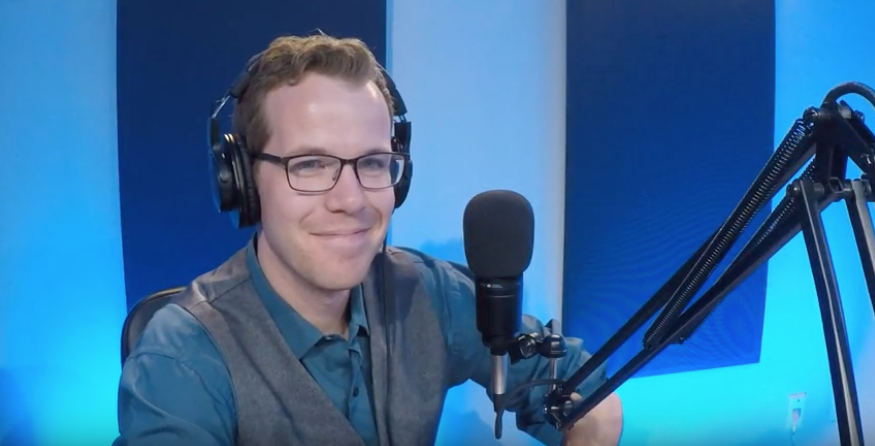
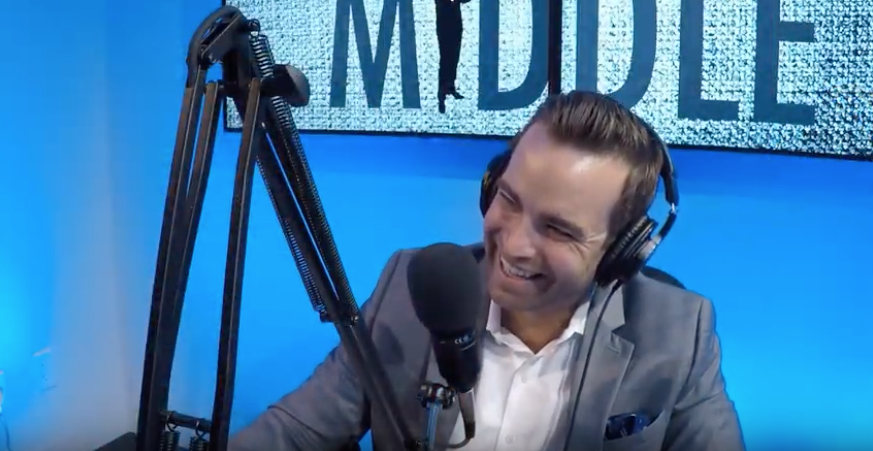
One of Denson’s guests stepped in on the discussion, explaining:
“I think the first place to start is education. You have to explain to people what it is then how it works. And then how it works and how it doesn’t. Let’s get some science, put things in test tubes and make it happen. Is it medically advantageous or is it not?”
Denson stepped in explaining the problem with the scientific research behind medicinal marijuana:
“There is one lab in Mississippi that grows all of the marijuana that is used in FDA testing. ONE. In Missipppi. The problem [is] for something to be passed by the FDA, it has to undergo tens of thousands if not hundreds of thousands of clinical tests.
It’s going to be a long time coming for the FDA because we don’t have tens of thousands, not hundreds of thousands, of plants available at this one facility. There are two pills that have been not FDA approved but the UK and the EU have approved of them that contain THC. And again, it’s an issue of large-scale testing. We don’t have large-scale testing done of clinical studies.
Right now, we have states that are actively pursuing it, and an FDA who doesn’t know what to do about it.”
That’s where the show’s namesake comes into play: where can the United States find middle ground on a federal level? Denson started by talking with his guests about where the discussion as a nation might begin with the legalization of marijuana, with the example of a cancer patient.
He explained how because marijuana considerably reduces the patient’s symptoms, many Americans would agree that it wouldn’t be wrong for them to use marijuana. On the other hand, he explained:
“You don’t want someone under the age of 21 drinking alcohol because it affects their growing brain. I don’t want an 18-year-old smoking marijuana. I would want you to be 21 or 25; I would actually push for 25.”
What about the argument that it’s a gateway drug, which one of his guests explained as “anything that alters your state of mind will lead you to pursue something that also alters your state of mind.”
Denson argued that you could say the same thing about drinking, and that “the average person who engages in alcohol or cigarettes doesn’t necessarily go down into hard drugs.”
So if the FDA can’t test this fast enough and some states are actively pursuing it, how do you have states leaning against the idea of the government body politic?
“The challenge we have here is reverse states rights. You’ve got the federal government effectively making a mandate over the other states saying, ‘we’re not going to allow this.’ This is the federal government saying, ‘we’re out on this,’ and that effect should trump anything the states want to do.
States like Colorado, like Washington, like Nevada, are saying, ‘it’s still wrong under the federal government, but we’re going to do it anyway,’ which is weird.
For me to smoke marijuana, it is still illegal for me at the federal level to do so, and if I’m tokin’ up and an FBI agent sees me, they can absolutely apprehend me. The Obama administration kind of said, ‘don’t worry about it. We got bigger fish to fry.’ And now, Jeff Sessions and his administration has said, ‘we’re cracking down, we’re coming after these places.’
But now [that] you have your address on Google Maps, the FBI can google ‘pot dispensary,’ they totally could come in and shut you down, arrest all of you, and send you to federal prison.”
Denson then brought up a deeper piece of the issue: how the cartels fit into the situation:
“In the absence of [marijuana] being legal, where do people go to get it? Well, they go to Illegal places to get it in those states, and those are oftentimes supplied by the cartels. So why are we not having a deeper conversation about that piece of this? where do we get drugs from where they manufacture generated produced? The cartels. Is there any middle ground on the fact that the cartels are a bad thing? I don’t think so.”
The adverse side effects of recreational marijuana use were then discussed by the group:
“The inhalation of smoke [is] not good for your lungs. Marijuana does impact the part of the brain linked to motivation. So those jokes about just being lazy [are] true actually. It does have a chemical effect on your motivation centers. These days, marijuana is addictive. It is different than the strains used in the 60s and 70s. Snoop Dogg will tell you it’s not addictive, it’s not habit-forming. That’s actually not true anymore.
The National Institute on Drug Abuse shows as many as four million Americans meet the diagnostic criteria for marijuana abuse disorder, but that’s because it’s not regulated.”
To argue against the slippery slope argument, one of the guests explained how he perceives marijuana to be the lesser of two evils:
“If you’re smoking a joint, you’re not necessarily downing Vicodin, but one can kill you, one won’t. I’m going to go with the one that won’t.”
So what should the US do about it? Denson offered his philosophy:
“Why has this become such the taboo point that we can’t seem to find some level of common ground. So let me speak as the Republican in the room. Liberals are always looking away for raising revenue. Hmm, why not tax this stuff?
I’m looking to my fellow Republican brethren out there: if we have the opportunity to take power out of the hands of the cartel and we have the opportunity to increase revenues to the state and federal government and we give people who need it from a medicinal perspective, where am I missing that this is the devil’s playground?
We as people in America are screaming out to our politicians and political leaders to come together on something. Can we just hold hands put a little Pink Floyd on in the background and find some common ground on this one? I mean, Democrats win because we increase revenues to the federal government Republicans win because we didn’t do it by taxing citizens on their income, rather on their consumption. But you’re, right regulation is important if anything’s going to happen.
For once, all Americans can come together united under one flag: the green one.”
Featured Episodes
Campaign Refinance
This week on Somewhere in the Middle, does the current U.S. campaign finance structure ensure that we get the candidate who’s the most qualified for their position, or the one who can raise the most money? What impact would congressional term limits have, if any? And is the word “principled” overused in politics?
Party Foul
Is the Democratic Party too big? It’s a challenging question, and both sides seem to have more than a few things to say about it. Democrats in 2018 may be finding themselves serving one too many masters, and their competition may find themselves serving one too few. Is there a balance between demographics? Can party affiliations cross party lines? The answer may be somewhere in the middle.
Just Do It
In the wake of a certain shoe company’s promotion of a certain athlete, Seth tackles a controversial topic that’s been making waves since it’s debut on the national gridiron in 2017 – kneeling during the national anthem. Is taking a knee a desecration of our patriotism? Is it an exercise of our very first amendment right? Or is there an answer somewhere in the middle?
It is through these experiences that he has developed his own thought process, opinions, and perspectives on politics, people, and life. Seth is a father, husband, business owner, and avid Nascar fan.
Seth is the Co-Founder & Chief Strategist at GDP Advisors. In addition to his role at GDP, he is an author, public speaker and a regular commentator for numerous media outlets including Fox News, ABC, CBS, and NBC. He is the author of The Cure: A Blueprint for Solving America’s Healthcare Crisis which is set to be released in 2019, a regularly published contributor to a number of print and online publications, and is a highly sought after keynote speaker on topics ranging from business to healthcare to politics and even fatherhood. Originally from Midland, Texas, but with experience in markets throughout the United States, including New York, Dallas/Fort Worth, and San Francisco, Seth blends metropolitan thinking with straightforward West Texas business ethics. He has served as a consultant for companies ranging from Fortune 500 organizations to privately held organizations and is a founding board member of ParadigmRe, a U.S. based health reinsurance captive.
Listen Now!
Find Somewhere in the Middle on Spreaker, Youtube, and Facebook.